
Peptides are short chains of amino acids that play a vitally important role in the human body. Unlike proteins, which consist of long amino acid chains (more than 50), peptides are shorter – usually from 2 to 50 amino acids. They are like biological keys that unlock specific cellular functions and regulate a great many physiological processes. In this article we explain what peptides are, how they work and why peptide bioregulators are becoming an increasingly popular way of supporting health.

Contents
What are peptides?
Peptides are molecules made up of two or more amino acids joined by peptide bonds. Unlike proteins, which consist of long amino acid chains (more than 50), peptides are shorter – usually from 2 to 50 amino acids. It is precisely because of their small size that peptides can easily pass through cell membranes and act directly on gene expression processes.
The human body produces peptides naturally – they regulate hormone activity, the immune system, digestion, nervous system functions and many other processes. However, peptide production naturally decreases with age.
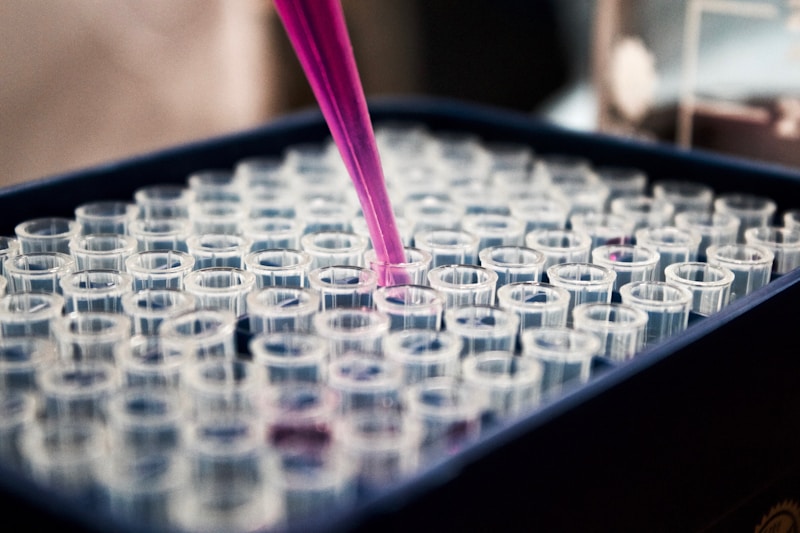
Peptide research in a modern laboratory
Products covered in this article

€184,10 €204,60

€184,10 €204,60

€144,00 €160,00
Peptide bioregulators: a scientific perspective
The concept of peptide bioregulators was developed by Professor Vladimir Khavinson and his team at the Institute of Bioregulation and Gerontology. Over more than 40 years of scientific research, thousands of peptides and their effects on the body have been studied.
Prof. Khavinson found that every organ and tissue has specific peptides that regulate the functions of that organ. When these peptides are taken as food supplements, they act as “information messengers” – passing signals to particular cells and helping to maintain normal organ function.
These peptides have been examined in numerous clinical studies involving more than 15 million people. The results of the research have been published in prestigious scientific journals and are recognised by the international scientific community.


How do peptide bioregulators work?
The way peptide bioregulators work is based on several key principles:
Organ specificity
each peptide preparation acts on particular organs or tissues. For example, Cerluten is intended to support the brain and nervous system, while Chelohart – heart muscle function.
Gene regulation
peptides interact with DNA and regulate protein synthesis, helping cells to perform their functions optimally.
Cell renewal
helps maintain normal cell renewal processes.
Support over the years
intended to help maintain normal organ function, which naturally changes with age.
Main groups of peptide bioregulators
Peptide bioregulators are divided into several main groups according to the organs they act on:
Nervous system and brain
Cerluten – brain and central nervous system peptides. Helps maintain the health of memory, concentration and cognitive function. Pinealon – a synthetic peptide intended to support brain functions.
Heart and blood vessels
Chelohart – heart muscle peptides. Ventfort – blood vessel wall peptides. Vesugen – a synthetic vascular peptide.
Immune system
Kristagen – a synthetic immune system peptide. Vladonix – thymus peptides, important for immunity.
Musculoskeletal system
Sigumir – cartilage and bone tissue peptides. Bonomarlot – bone marrow peptides.


Principles of taking peptides
Peptide bioregulators are usually taken in courses. It is recommended to:
- check_circle Take 1-2 capsules a day before food
- check_circle Course length – 30 days
- check_circle The course can be repeated every 3-6 months
- check_circle Several different peptides can be combined at the same time
- check_circle Peptides are generally well tolerated
Why choose peptide bioregulators?
Peptide bioregulators offer a unique approach to health – they help maintain normal organ function at the cellular level. They are:
obtained from tissues of animal origin or synthesised in a laboratory
taken in line with the recommended daily dose
the subject of more than 40 years of scientific research and patents
intended for adults who want to maintain normal body function
How cytomaxes differ from cytogens, and capsules from sublingual drops, is explained in the guide What Are Peptides?; all NPCRIZ peptides with prices are in the NPCRIZ Peptides collection. Have a question? Get in touch with us.
Browse NPCRIZ peptides arrow_forwardSources
- 1. Khavinson, V.Kh. “Peptides and Ageing.” Neuroendocrinology Letters, Vol. 24, No. 3-4, 2003, pp. 144–149.
- 2. Khavinson, V.Kh., Malinin, V.V. Gerontological Aspects of Genome Peptide Regulation. Karger, Basel, 2005.
- 3. Khavinson, V. “Peptide regulation of aging: 35-year research experience.” Bulletin of Experimental Biology and Medicine, Vol. 152, No. 1, 2011, pp. 7–12.
- 4. Institute of Bioregulation and Gerontology – scientific publications and clinical trial data (Institute of Bioregulation and Gerontology).
- 5. Khavinson, V.Kh., et al. “Epithalon peptide induces telomerase activity and telomere elongation in human somatic cells.” Bulletin of Experimental Biology and Medicine, Vol. 135, No. 6, 2003, pp. 590–592.


